

Challenges in Marketing a Friendship/Connection Educational Event
I’ve wrestled with how to market this event series we’re building. Here’s the core tension: underneath everything, the mission is basically trying to combat loneliness… except you absolutely cannot market it like that. The word “loneliness” lands on people’s most tender spot, and it can instantly trigger shame or defensiveness. And I get it. I feel how sensitive it is, even as someone who’s done a lot of work to be more “shame-resilient” about it. (Brene Brown reference)
So I’m stuck in this weird place where I want to be honest about the actual problem, but honesty isn’t always helpful if it shuts the door before anyone walks in. Just as I learned making YouTube video titles, the goal of marketing isn’t accuracy—it’s getting people to enter the room and hopefully be healed.
The Apple analogy: don’t put “internal jargon” in the ad
Apple doesn’t advertise iPhones using internal technical language. They don’t lead with the complicated machinery happening behind the scenes—they lead with what it does for you. Simple benefits, clean language.
And I realized that “loneliness” is our internal technical jargon. It’s the behind-the-scenes problem explaining why the work matters, but it’s not the label you plaster outside the front door. There’s a time and place to name it—just not as the headline.
A big epiphany for me was that marketing language is fundamentally different and nearly mutually exclusive from solution language. It’s what you post on the outside of the building. But the solution is what people discover once they’ve entered the room. Marketing language is the YouTube video’s title; solution language is it’s “content.” The solution is what can shift people’s knowledge, beliefs, and mindsets—ultimately allowing them to connect better.
I tend to want to hand people the whole truth upfront, but this project needs a gentler approach—more invitation, less diagnosis.
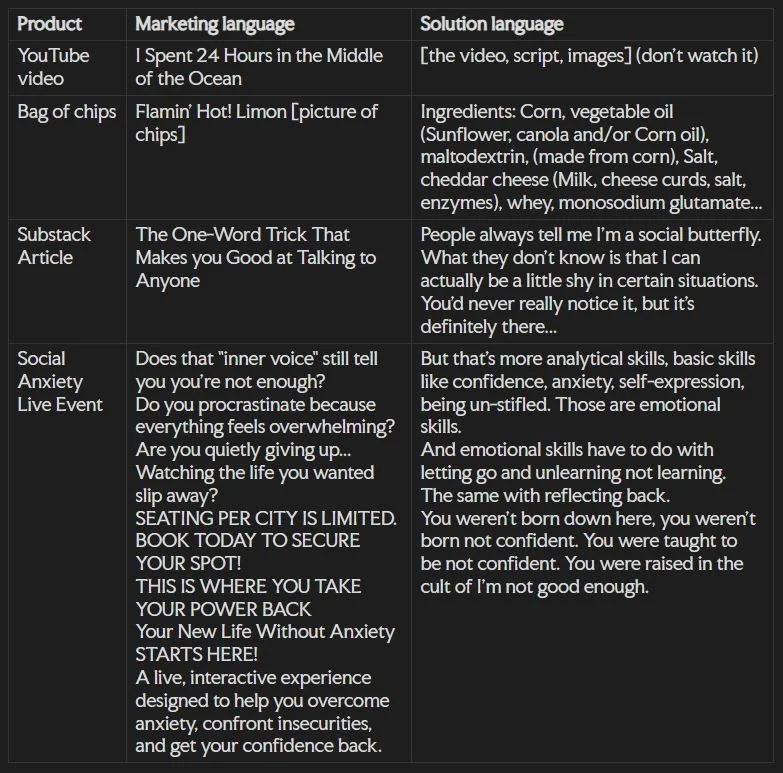
Reframing Toward Connection
The solution seems obvious once I stop fighting it: frame it positively. Lead with connection. Lead with friendship. Lead with skills and curiosity and hope.
Titles like:
- “What Actually Builds Friendship”
- “The Science of Friendship”
- “How to Connect Better / Build Better Friendships”
That framing doesn’t shame anyone—it gives them a reason to show up without having to self-identify as “the lonely person.” Oof. It’s more like: you’re a normal human who wants better relationships (which is… everyone).
At the same time, I don’t want to lose the empathetic heart of it. I still think there’s a moment—once trust exists—to say “it’s not just you,” because that landed well in previous sessions. A part of my mission is still to normalize that connection is harder now than it used to be. To offer empathy (which is one powerful antidote to shame), but without forcing people to confess anything in order to enter the building.
Crafting delicate language is a whole job
Crafting this language feels like breaking into a museum: I’m trying to help people by sneaking past emotional alarm systems. Like I’m sliding under lasers—not to be manipulative, but to heal. To get past the part of the brain that hears one loaded word and puts up armor. This is the same challenge with sharing the Gospel with people.
I’ve realized that a large chunk of my work on this project isn’t logistics—it’s language. Finding the phrasing that invites instead of wounds. And once we find it, we stick with it.
Highlight of the Day
Finally accepting that the mission can stay the same while the marketing language shifts—“connection” is the invitation, and the deeper loneliness conversation belongs inside the room, not on the flyer.
